

Infant & Toddler Swim Lessons in League City
Infant Swim Lessons: Traditional Programs vs Infant Aquatics

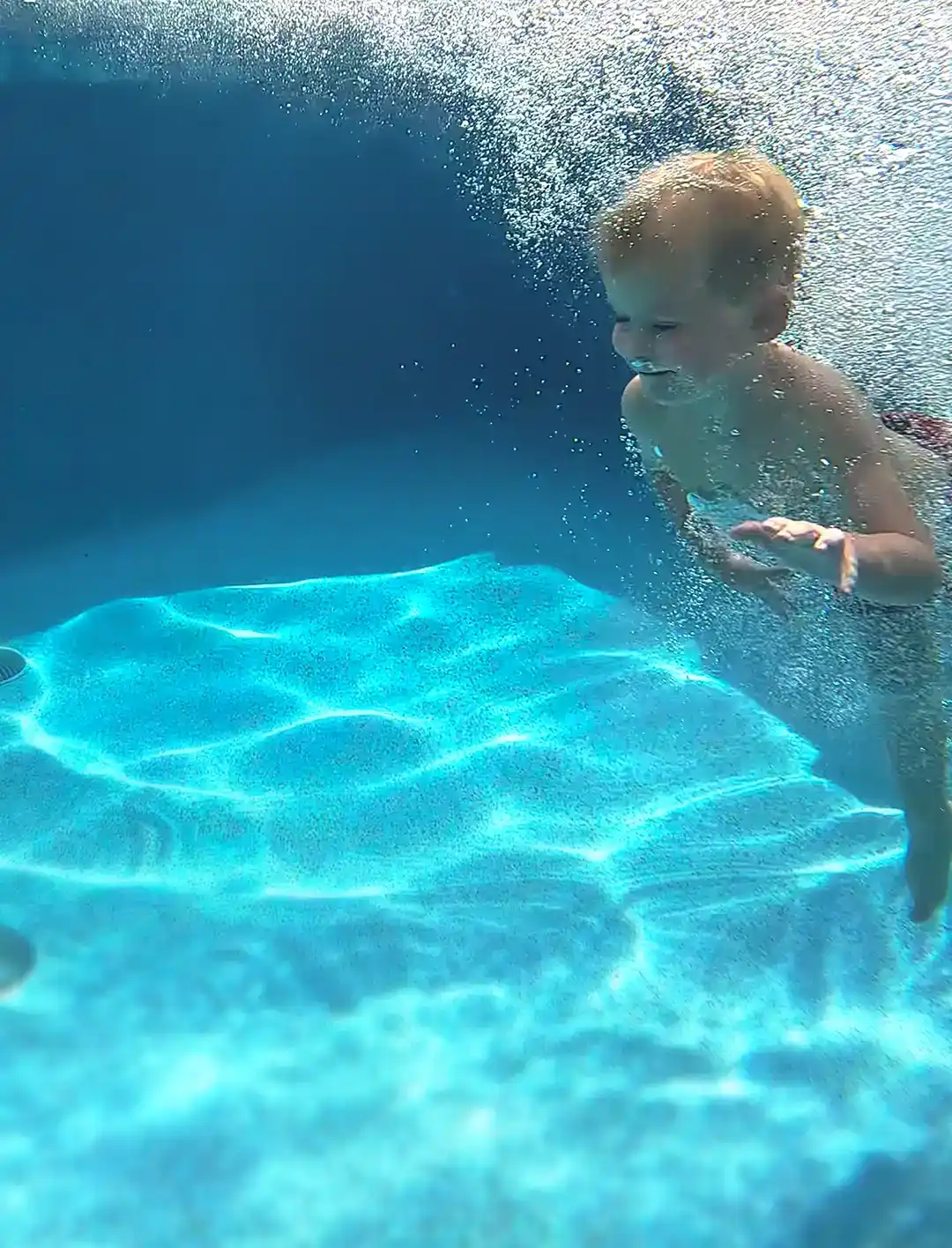
Infant & Toddler Swim Lessons in League City
Infant Swim Lessons: Traditional Programs vs Infant Aquatics
Most parents don’t start searching for infant swim lessons because they’re excited. They start because something suddenly feels risky.
Maybe it’s a backyard pool...
Maybe it’s summer coming up...
Maybe it’s the moment your toddler moves faster than you expected...
When you start looking, the options sound similar. Swim schools promise confidence, safety, and progress - but it’s hard to tell what actually makes one program different from another.
This guide is here to help you understand those differences before you choose.
Quick Summary
Understanding how lesson structure, frequency, and teaching style affect learning can help parents choose a program that fits their child and gives them more confidence around water.
Why Parents Start Searching for Infant Swim Lessons
Parents don’t sign up for infant swim lessons because they’re relaxed. They sign up because they’re worried.
Sometimes the concern comes from having a pool at home.
Sometimes it’s from visiting grandparents or friends with pools.
And sometimes it’s the quiet fear that something could happen when no one is expecting it.
Most families believe nothing bad will happen - until they have a close call. We thought that too.
That concern is what pushes parents to start looking for swim lessons in the first place. Not for perfect strokes, but for safety.
What Traditional Infant Swim Lessons Usually Look Like
Many families begin with traditional infant swim lessons because they feel familiar and low pressure.
These programs often focus on:
Group classes
Once-a-week lessons
Water comfort and basic movement
For some families, this is a positive start. Babies enjoy the water, parents feel proactive, and lessons become part of the weekly routine.
Over time, though, many parents notice progress feels slower than they expected.
Why Progress Can Feel Slow in Group Infant Swim Classes
Traditional infant swim lessons are usually built around:
Group pacing
Age-based milestones
Limited individual attention
In a group setting, instructors must divide their focus. Skills are introduced slowly so all children stay together.
Loving the water doesn’t always mean a child knows what to do if they fall in unexpectedly.
Traditional Infant Swim Lessons vs Infant Aquatics
This is where many parents begin to see clear differences.
Lesson Frequency Matters for Infants
Infants learn through repetition.
Once-a-week exposure can make it hard for skills to stick. Infant Aquatics uses:
Short lessons
Multiple days per week
A defined program timeline
This approach builds muscle memory, not just familiarity.
Private vs Group Instruction
Infant Aquatics lessons are one-on-one. That means:
No waiting on the wall
No divided attention
Immediate adjustments based on your child
For babies and toddlers who communicate through movement and emotion, this level of focus matters.
Safety Without Fear
Some parents worry that faster programs mean more pressure.
That doesn’t have to be true.
At Infant Aquatics, crying is communication - not failure. Children are supported, guided, and taught at their pace while still learning real safety skills.s lessons are one-on-one. That means:
Why Some Parents Choose Infant Aquatics Instead
Parents who come to us often say the same thing:
“I just want to know my child can handle themselves in the water.”
Infant Aquatics is designed to help babies and toddlers:
Feel calm and supported
Learn early water awareness
Build confidence through real skills
Because children gain control more quickly, we’re able to introduce:
Forward movement
Breath control
Early stroke foundations
Safety comes first - but it doesn’t stop there.
A Note for Parents Considering Houston Swim Club
We work with many families who began their swim journey at Houston Swim Club or similar programs.
Houston Swim Club helps many children get comfortable in the water, and it’s often where parents first start looking for infant swim lessons.
Over time, some families realize they want:
Faster progress
More individualized attention
Skills that apply to real-life situations
One parent told us after completing our seven-week program:
“I can’t take my kids back to Houston Swim Club - they would be way too advanced for their classes.”
That moment of clarity is common.
What We See After Our Seven-Week Infant Swim Program
By the end of the program, many children are:
Calm in the water
Aware of their surroundings
Moving with purpose instead of panic
Parents often tell us they feel more confident around pools — not because they’re less watchful, but because their child has real skills.
How to Choose the Right Infant Swim Lessons Near You
When comparing infant swim lessons, ask:
How often will my child practice?
Are lessons private or group-based?
What skills should my child have by the end?
How does the instructor respond to fear or tears?
Can I observe lessons?
Those answers will tell you more than any brochure.
Infant Swim Lessons in League City
Choosing infant swim lessons is about more than convenience.
It’s about confidence, safety, and peace of mind.
Infant Aquatics serves families in League City and nearby communities who want a faster, more effective approach to early swim safety — without fear or pressure.
Ready for your children to become confident swimmers?


LOCATION: LEAGUE CITY, TX
We are located in Marina Bay Park (near Ferguson Elementary). The closest intersection would be South Shore Blvd and Compass Rose.


Swimming Lessons are not a replacement for active supervision. For more information on "layers of protection" and water safety please visit National Drowning Protection Alliance and Pool Safely. No one can "drown-proof" a child.
By pressing "Continue To Next Step" you consent for Counterpoint Industries, LLC and its authorized vendors to contact you at the telephone number provided for marketing purposes, with the use of technology that may include automatic dialing or prerecorded technology. Msg & Data Rates May Apply. Text back STOP at any time to opt-out. Consent is not required to make a purchase.
INFANT AQUATICS®, INFANT AQUATIC SURVIVAL®, Swim Float Swim® and the ‘Baby Logo’® are trademarks owned by Infant Aquatics, LLC, Boulder Colorado, and used under license. All rights reserved. Used with permission.
Swim Angelfish®, Swim Whisperers®, and Swim Whisperers® are registered trademarks owned by Swim Angelfish LLC, based in Connecticut, and licensed to Counterpoint Industries, LLC. All rights reserved.
© Counterpoint Industries, LLC 2025 | All Rights Reserved | Terms of Use & Privacy Policy