

Infant Aquatics vs ISR in League City: A Parents Guide
How I Found a Better Way to Teach My Kids Water Safety
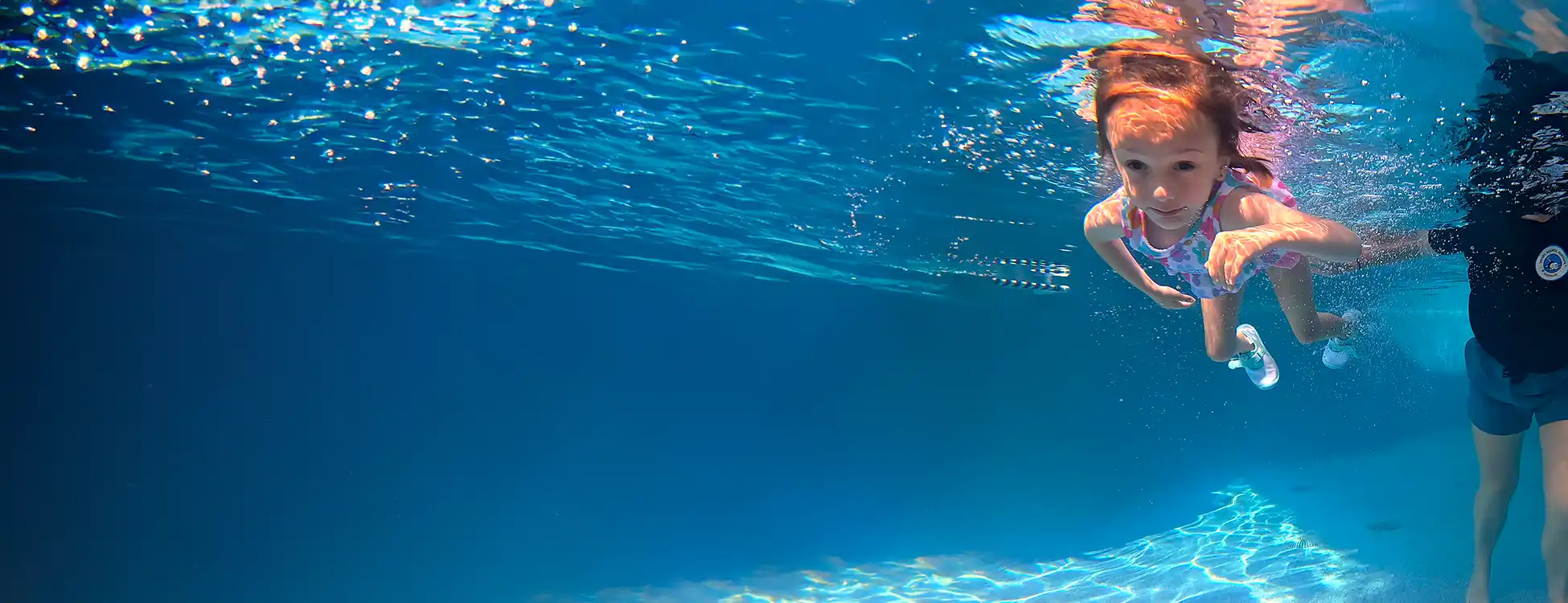
One Parents Review: ISR vs Infant Aquatics in League City
How I Found a Better Way to Teach My Kids Water Safety
When I first started looking into survival swim lessons in League City, TX, I didn’t know there were real choices.
Around here people say “League City ISR” the way others say “Kleenex” … like it’s the name for that whole style of lessons.
Lots of parents just think ISR stands for Infant Self-Rescue, and they use the terms almost like they mean the same thing. I did too… until years later when I started looking at becoming an instructor myself.
That was the moment I started asking better questions.
Quick Summary
- Traditional swim lessons focus on strokes and group progress, not emergency self-rescue.
- Survival swim programs teach safety skills, but the experience and results can vary widely.
- Infant Aquatics combines survival skills and real swimming development from the start.
- Lessons are structured for safety, confidence, and long-term success — not just short-term survival.
- The right program should help your child feel calm, capable, and confident in the water.
Why Parents Start Looking for Survival & Self-Rescue Lessons
Most parents sign up for survival/self-rescue swim lessons because they’re worried. We didn’t sign up because we wanted another activity on the calendar - we signed up because we knew pools were a real risk and we didn’t want to worry every time we were around a pool.
My in-laws have a pool and we are there often so every family visit came with a small, constant worry: what if…?
That worry is normal. It doesn’t mean you’re an overprotective parent - it means you care.
For many families in League City TX, ISR is the first program they hear about.
It’s been around here for years, and you’ll often hear other parents recommend it as the best solution for swim lessons.
With that kind of reputation, it’s easy to stop looking - even though there are meaningful differences between programs that don’t always get talked about.
Why I avoided ISR with our third child - and what happened next…
We actually did League City ISR (Infant Swimming Resource) lessons with our first two kids. We tried a few instructors - some were wonderful with kids, and some were not.
By the time our third came around, I wanted something different. I didn’t want a repeat of a program where an instructor would yell at my crying child, or rush a result because “that’s how they do it.”
We avoided ISR for the third… until one day my little one jumped into the pool without his floaty.
He was fine, but that moment terrified me. It showed me that surviving a close call and truly learning to be safe are not the same thing.
That’s when I stopped asking whether there was a “quick” fix and started asking how to teach kids skills that last - and how to do it in a way that didn’t make them scared of the water.
Why I Chose to Train in Infant Aquatics (Instead of ISR)
When I started looking at programs from the instructor side, I wasn’t just asking how kids learn to survive — I was asking what kind of swimmers they become afterward.
Here’s what stood out to me:
Infant Aquatics vs ISR - Key Differences Parents Care About
What Parents
Care About
Infant Aquatics©
ISR (Infant Swimming Resources)©
End Goal
Develop survival skills first, then progress into strong, confident swimming and early stroke development.
Develop & maintain survival response (float)
Teaching Style
Calm, supportive, child-led within structure
Instructor-dependent
Emotional Experience
Builds confidence and trust through a calm, supportive learning environment.
The emotional experience can vary depending on the instructor and the child.
Skill Progression
Survival → movement →
early strokes
Survival first, swimming later
Long-Term Outcome
Children progress from survival skills into real swimming - building confidence, early strokes, and a love for the water.
Emergency survival skills focused on floating and maintenance.
Parent Involvement
Education + communication throughout the process
Varies by instructor
End Goal
Infant Aquatics:
Develop survival skills first, then progress into strong, confident swimming and early stroke development.
ISR:
Develop & maintain survival response (float)
Teaching Style
Infant Aquatics:
Builds confidence and trust in the water
ISR:
Survival response (float)
Emotional Experience
Infant Aquatics:
Builds confidence and trust through a calm, supportive learning environment.
ISR:
The emotional experience can vary depending on the instructor and the child.
Skill Progression
Infant Aquatics:
Survival → movement → early strokes
ISR:
Survival first, swimming later
Lesson Scheduling
Infant Aquatics:
Medically-guided lesson length, scheduled with extra time for warm-up, play, and positive transitions.
ISR:
Medically-guided lesson length, typically scheduled back-to-back.
Long-Term Outcome
Infant Aquatics:
Children progress from survival skills into real swimming - building confidence, early strokes, and a love for the water.
ISR:
Emergency survival skills focused on floating and maintenance.
Parent Involvement
Infant Aquatics:
Education + communication throughout the process
ISR:
Varies by instructor
This doesn’t mean ISR is “bad.” Some ISR instructors are excellent.
But for me, Infant Aquatics aligned better with how I believe children learn - and how I wanted kids to feel about the water long-term. And it seems I am not alone in this (See what other parents are saying here)
What the Training Taught Me
When I trained in Infant Aquatics, it was intense. I spent weeks in the water every day learning anatomy, medical considerations, and how to work with children with different needs and abilities.
I also trained with Swim Angelfish, which deepened my understanding of how to teach children with autism, cerebral palsy, and other special abilities - something that matters deeply to me and to many families in our community.
My background in education and music helped, but the training itself is what made the difference. It taught me how to:
Read a child’s cues in the water
Adjust teaching without rushing progress
Keep safety first without creating fear
Build swimmers, not just check off skills
Parents don’t usually see how much work goes into becoming a good instructor.
It’s immersive. It’s detailed. And it’s about far more than just showing up.
Lesson Length - What Actually Matters
You might hear that “ISR lessons are only 10 minutes.” There’s a reason for that—it’s based on medical safety standards for young children in the water.
We follow that same safety-first approach. Our lessons are 10 minutes long, designed to match what a child can safely handle while still making fast, meaningful progress.
But here’s what most people miss… Those 10 minutes aren’t rushed or rigid.
We still prioritize connection, calm starts, and positive finishes—helping each child feel safe, confident, and in control in the water. Some days that looks like focused skill work. Other days it means slowing down, adding play, and meeting the child where they are.
Because progress doesn’t come from longer lessons… It comes from consistent, high-quality repetitions done the right way.
And that’s exactly what we focus on every single day.
What real families tell us after six/seven weeks
Parents say the same things again and again:
“I wish we did this sooner.”
“My child actually loves the water now.”
“We tried other lessons for months and didn’t see this.”
Some quick examples from our pool:
Tyler, a child on the autism spectrum, used to cling to us and scream. Over time he learned to swim with his head down and play in the water. That change didn’t happen overnight, but it happened because of consistent practice and trust.
Carissa, who has cerebral palsy, floated and swam in ways I honestly didn’t think she would be able to. Her mom still cries talking about it.
Beaux used to throw fits at the start of lessons. Now he jumps in and goofs off because the pool is a place he feels confident.
Those aren’t marketing stories. They’re what we see. Kids move from fear to joy when the teaching fits the child.
Safety without making kids scared
One myth I hear all the time is that survival lessons have to be harsh.
That’s not true.
Controlled challenge is part of learning - controlled, not traumatic.
We count, we watch, we never let a child take water into their lungs in a dangerous way. We explain what we’re doing and we reassure kids.
Parents are often more worried than the children - so we take time to calm and coach families too.
What Infant Aquatics teaches beyond “don’t drown”
The Infant Aquatics Survival Swim Program does teach survival skills - of course. But we do it more efficiently and more gently, so we can also teach the beginnings of strokes, how to check your surroundings, how to ask permission, and how to enjoy swimming.
Our final checkout is not just “can they float?” – it’s: can they check where they are, ask for permission, and then jump into the water excitedly and safely?
That combination: survival + swim skill + joy - is what changes how families live with water.
A word about ISR - and why we’re not trying to start a fight
I don’t want to make it sound like ISR is all bad. Some ISR instructors teach with kindness and skill.
The difference I see is the method and how instructors treat children.
If you have a great ISR instructor, that can work. But if you’re comparing programs, consider the whole package: method, instructor empathy, and whether the program sets your child up to enjoy and move in the water - not just survive a fall.
We believe Infant Aquatics is the better option for many families because it builds swimmers quickly, safely, and happily. But the right choice will always depend on the instructor and the fit for your child.
If you’re in League City and you’re deciding what to do
It’s okay to be worried. That worry is why you reached out. Ask questions when you call:
What does a typical lesson look like?
How long are lessons scheduled?
How do you handle crying or fear?
What are the real results — not just promises?
Watch a lesson if you can. See how the instructor speaks to kids. Do they play? Do they reassure? Or does it look rushed and stressful?
Final thought - why I do this
I teach because I saw what a better method could do.
I trained because I wanted to bring a safer, kinder, and more effective program to our community.
My hope for every child is simple: that they are safe around water, confident in the pool, and that they learn to love swimming - not fear it.
If you want to talk about League City options, ask about our Infant Aquatics Survival Swim Program, or come watch a lesson - I’d love to meet you and your child.
Ready for your children to become confident swimmers?


LOCATION: LEAGUE CITY, TX
We are located in Marina Bay Park (near Ferguson Elementary). The closest intersection would be South Shore Blvd and Compass Rose.


Swimming Lessons are not a replacement for active supervision. For more information on "layers of protection" and water safety please visit National Drowning Protection Alliance and Pool Safely. No one can "drown-proof" a child.
By pressing "Continue To Next Step" you consent for Counterpoint Industries, LLC and its authorized vendors to contact you at the telephone number provided for marketing purposes, with the use of technology that may include automatic dialing or prerecorded technology. Msg & Data Rates May Apply. Text back STOP at any time to opt-out. Consent is not required to make a purchase.
INFANT AQUATICS®, INFANT AQUATIC SURVIVAL®, Swim Float Swim® and the ‘Baby Logo’® are trademarks owned by Infant Aquatics, LLC, Boulder Colorado, and used under license. All rights reserved. Used with permission.
Swim Angelfish®, Swim Whisperers®, and Swim Whisperers® are registered trademarks owned by Swim Angelfish LLC, based in Connecticut, and licensed to Counterpoint Industries, LLC. All rights reserved.
© Counterpoint Industries, LLC 2025 | All Rights Reserved | Terms of Use & Privacy Policy
* South Shore Infant Aquatics is not affiliated with or endorsed by Infant Swimming Resource (ISR). ISR is a registered trademark of Infant Swimming Resource, LLC. While our program was developed by a former ISR instructor, Infant Aquatics is a separate and independent program with its own methodology, curriculum, and approach.